•  

2,000-year-old temple reveals China's Buddhist history

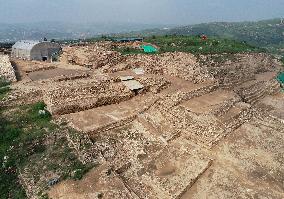
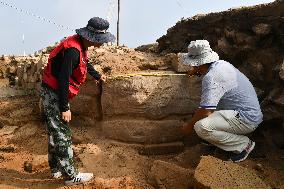
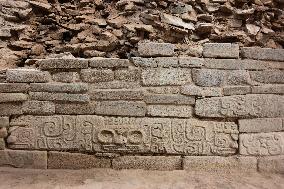
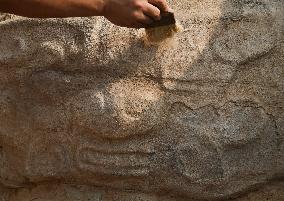
STORY: 2,000-year-old temple reveals China's Buddhist history SHOOTING TIME: Recent footages DATELINE: May 9, 2024 LENGTH: 00:00:49 LOCATION: GONGYI, China CATEGORY: CULTURE SHOTLIST: 1. various of the Ciyun Temple in Gongyi, Henan Province, central China STORYLINE: The Ciyun Buddhist Temple in Gongyi, central China's Henan Province, has a history of about 2,000 years. It serves as a rich repository of historical artifacts for the study of Buddhism in China. A stone inscription, dating back to the Ming Dynasty (1368-1644), records the founding of the temple in the seventh year of the Yongping Era (64 AD). The temple has over 50 stone inscriptions from ancient China. The temple's abbot, Shi Yanchao, has devoted himself to the study of these artifacts and the stories they tell. Xinhua News Agency correspondents reporting from Gongyi, China. (XHTV)

  •  

Namibian exhibition explores cultural heritage of repatriated art

STORY: Namibian exhibition explores cultural heritage of repatriated art SHOOTING TIME: April 11, 2024 DATELINE: April 13, 2024 LENGTH: 0:02:19 LOCATION: Windhoek CATEGORY: SOCIETY SHOTLIST: 1. various of the art exhibition 2. SOUNDBITE (English): NDEENDA SHIVUTE-NAKAPUNDA, Chief curator at National Art Gallery of Namibia 3. various of the art exhibition STORYLINE: Namibia opened an exhibition in the Namibian capital of Windhoek Thursday evening dedicated to exploring the cultural customs and identity of the country's looted art to retrieve its heritage. The exhibition, themed "Artistic Research Communal Knowledge (ARCK): Reconnecting with Returned Cultural Belongings," features 23 cultural and historical belongings that were returned from the Ethnological Museum, a public institution dedicated to ethnology and culture in Berlin, Germany, to Namibia in May 2022. The artifacts, including milk gourds, calabash, woven baskets, and traditional wooden cups, will be displayed at the National Art Gallery

  •  

Türkiye launches mass restoration project across Istanbul

STORY: Türkiye launches mass restoration project across Istanbul SHOOTING TIME: Jan. 24, 2024 DATELINE: Jan. 25, 2024 LENGTH: 00:01:32 LOCATION: ISTANBUL, Türkiye CATEGORY: SOCIETY SHOTLIST: 1. various of Istanbul city in Türkiye 2. various of Istanbul historical artifacts restoration projects promotion meeting, Istanbul Governor Davut Gul 3. SOUNDBITE (Turkish): DAVUT GUL, Istanbul Governor 4. various of restored Ottoman period fountains in Istanbul, Türkiye STORYLINE: Türkiye on Wednesday launched a big restoration project to save 1,000 artifacts, including ancient fountains, mosque cemeteries, and samples of civil architecture across the country's cultural hub Istanbul. Istanbul Governor Davut Gul announced that the project would be completed within three years, and restoration work has already begun on 225 artifacts. SOUNDBITE (Turkish): DAVUT GUL, Istanbul Governor "It is our priority to protect these artifacts inherited from our ancestors and leave them to future generations." According t

  •  

Turkish police detain 5 suspects, seize artifacts in anti-trafficking raids

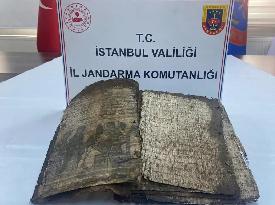
STORY: Turkish police detain 5 suspects, seize artifacts in anti-trafficking raids DATELINE: July 15, 2023 LENGTH: 00:01:09 LOCATION: ISTANBUL, Türkiye CATEGORY: SOCIETY SHOTLIST: 1. various of Istanbul 2. various of police officers seizing the historical artifacts in the house they raided in Istanbul, Türkiye 3. various of police officers searching the suspects' car 4. various of the artifacts exhibited at the police headquarters in Istanbul, Türkiye STORYLINE: Turkish police have launched a sweeping operation in Istanbul against smugglers of historical artifacts over the last month, seizing a large number of coins and copies of the Bible and Old Testament, local media reported on Friday. The police detained five suspects during the raids in eight districts, including Fatih, Kartal, and Umraniye, the Demiroren news agency reported, adding that the suspects are facing the charge of "violating the law on the protection of cultural heritage." They also seized more than 4,000 coins dating back to the Greek,

  •  

1,500-year-old grave steles discovered in Türkiye's Istanbul

STORY: 1,500-year-old grave steles discovered in Türkiye's Istanbul DATELINE: July 7, 2023 LENGTH: 00:01:13 LOCATION: ISTANBUL, Türkiye CATEGORY: CULTURE SHOTLIST: 1. various of Sarachane archaeology park in Istanbul, Türkiye 2. pics of 1,500-year-old grave steles 3. various of Sarachane archaeology park in Istanbul, Türkiye STORYLINE: At least three ancient grave steles have been discovered in downtown Istanbul, Türkiye's largest city, local officials announced Thursday. Mahir Polat, deputy secretary-general of the Istanbul Municipality, said the 1,500-year-old steles were unearthed during the ongoing archeological excavation at the Sarachane Archeology Park. "Our teams have unearthed a magnificent group of historical artifacts just one meter below the surface in the heart of Istanbul," Polat told reporters at a press briefing at the park. The official said another artifact has also been found in the same excavation in the park, but it is still unclear whether it is a grave stele. Xinhua News Ag

  •  

Turkish police recover thousands of artifacts in anti-trafficking raid

STORY: Turkish police recover thousands of artifacts in anti-trafficking raid DATELINE: June 24, 2023 LENGTH: 00:01:30 LOCATION: ISTANBUL, Türkiye CATEGORY: CULTURE SHOTLIST: 1. various of Istanbul 2. various of police officers unpacking the historical artifacts seized during the operation 3. various of gold, silver, and bronze coins and other artifacts seized STORYLINE: The Turkish police captured two suspects and recovered thousands of artifacts during a massive operation in Istanbul targeting trafficking in stolen antiquities, local media reported Friday. A total of 2,295 gold, silver and bronze coins of different sizes dating back to the Greek, Roman, Byzantine and Ottoman empires were seized in the operation launched as part of an ongoing nationwide crackdown on illegal antiquities trafficking and smuggling, the Ihlas News Agency reported. The police also found 44 arrowheads and various terracotta items dating back to the four empires, the report said. Early this month, Turkish security forces seiz

  •  
TÜRKIYE-ISTANBUL-HEBREW BIBLE-ANCIENT COPY-SEIZURE

TÜRKIYE-ISTANBUL-HEBREW BIBLE-ANCIENT COPY-SEIZURE

(230612) -- ISTANBUL, June 12, 2023 (Xinhua) -- This photo taken on June 12, 2023 shows an ancient copy of the Hebrew Bible seized by the Turkish gendarmerie forces during an operation in Istanbul, Türkiye. The Turkish gendarmerie forces have seized an ancient copy of the Hebrew Bible during an operation to stop the illicit trade of historical artifacts. The copy is believed to be 1,100-year-old, according to a statement by the Istanbul Provincial Gendarmerie Command on Monday. (Photo by Omer Kuscu/Xinhua)

  •  

Cultural heritage conservation activities held in NE China

STORY: Cultural heritage conservation activities held in NE China DATELINE: June 11, 2023 LENGTH: 0:01:11 LOCATION: HARBIN, China CATEGORY: CULTURE SHOTLIST: 1. various of the Jin Shangjing History Museum and the activities STORYLINE: Activities themed on cultural heritage conservation were held in Acheng District of Harbin, northeast China's Heilongjiang Province on Saturday, which marked this year's Cultural and Natural Heritage Day in China. At the Jin Shangjing History Museum, artifacts that tell the story of the magnificent ancient capital of the Jin Dynasty (1115-1234) attracted many visitors. The Jin Dynasty was first established in Huining, the present Acheng District. To revitalize its rich historical heritage, Acheng has been coordinately promoting heritage conservation, archaeological excavation, and cultural tourism. This year, over 200 activities were held in Heilongjiang Province to celebrate Cultural and Natural Heritage Day. Xinhua News Agency correspondents reporting from Harbin, China

  •  

Nearly 300 artifacts saved in Türkiye's earthquake zone: media

STORY: Nearly 300 artifacts saved in Türkiye's earthquake zone: media DATELINE: March 28, 2023 LENGTH: 00:01:40 LOCATION: ISTANBUL, Türkiye CATEGORY: CULTURE/SOCIETY SHOTLIST: 1. file of buildings destroyed by earthquakes in Hatay, Türkiye 2. file of archaeologists excavating historical artifacts under the rubble 3. file of historical mosques damaged by earthquakes in Hatay, Türkiye 4. file of an Orthodox church damaged by earthquakes in Hatay, Türkiye STORYLINE: Academics digging through earthquake rubble in Türkiye's southern province of Hatay have unearthed nearly 300 artifacts, local media reported on Tuesday. The Ministry of Culture and Tourism established the Disaster Area Excavation Directorate to salvage any treasures lost to the devastation in Hatay, a cosmopolitan province home to many ancient Christian, Muslim, and Jewish sites, the state-run Anadolu agency said. The team, led by Caucuses University Art History Department head Dr. Muhammet Arslan and including 16 scientists and 21 students fro

  •  

10,500 artifacts unearthed in Türkiye in 2022

STORY: 10,500 artifacts unearthed in Türkiye in 2022 DATELINE: Jan. 20, 2023 LENGTH: 00:02:24 LOCATION: ISTANBUL, Türkiye CATEGORY: SOCIETY SHOTLIST: 1. various of the archaeological excavation site at Haydarpasa Train Station 2. various of the archaeological excavation site at Zerzevan Castle 3. various of Corum Museum, Türkiye 4. various of the Hittite cuneiform tablets in Corum Museum 5. various of historical artifacts in Corum Museum STORYLINE: A total of 10,500 artifacts for museum collections were unearthed in 249 archaeological digs in Türkiye in 2022, according to data from the Turkish General Directorate of Museums and Cultural Heritage. The vast majority of these digs were conducted by Turkish teams, while foreign teams ran 32 excavations. Most digs were on land, while seven were conducted underwater to uncover sunken treasures. Once home to countless ancient civilizations, from the Hittites to the Hellenistic States and the Roman Empire, modern Türkiye is rich in archaeological treasures. Yah

  •  
Historical artifacts loaned from Taiwan on display as planned

Historical artifacts loaned from Taiwan on display as planned

TOKYO, Japan - Japanese and Taiwanese media members wait for the start of a private viewing for an exhibition at the Tokyo National Museum in Tokyo of historical Chinese artifacts on loan from Taiwan's National Palace Museum on June 23, 2014, following the Japanese side's apology for having omitted the word "National" on posters and other materials and the reinstatement of the official name.

  •  
King Tut's golden mask at museum in Cairo

King Tut's golden mask at museum in Cairo

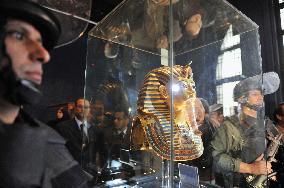
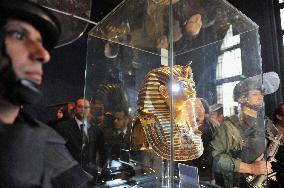
CAIRO, Egypt - Soldiers guard the golden mask of King Tutankhamun at the Museum of Egyptian Antiquities in Cairo on Feb. 16, 2011. A number of historical artifacts are believed to have been stolen during the uprising to overthrow Egyptian President Hosni Mubarak.

  •  

New evidence of Japanese chemical warfare unit disclosed

STORY: New evidence of Japanese chemical warfare unit disclosed DATELINE: Dec. 12, 2022 LENGTH: 00:02:36 LOCATION: HARBIN, China CATEGORY: OTHERS SHOTLIST: 1. various of the exhibition hall 2. SOUNDBITE 1 (Chinese): JIN CHENGMIN, Curator of exhibition hall 3. various of the exhibition hall 4. SOUNDBITE 2 (Chinese): JIN CHENGMIN, Curator of exhibition hall 5. various of the exhibition hall 6. SOUNDBITE 3 (Chinese): JIN CHENGMIN, Curator of exhibition hall STORYLINE: New evidence related to a Japanese chemical warfare unit has been disclosed for the first time in the renovated Museum of Evidence of War Crimes by the Japanese Army Unit 731 in Harbin, China's Heilongjiang Province. The new incriminating evidence includes 2,862 artifacts, 23,000 pages of historical materials, and 810 minutes of video footage about the Japanese Army Unit 731. Among them, a core archive has been unveiled, providing first-hand evidence for an in-depth study of the overall scale, identity and state of personnel in Unit 731. SOU

  •  

Iraqi craftsmen work to promote traditional handicrafts

STORY: Iraqi craftsmen work to promote traditional handicrafts DATELINE: Nov. 17, 2022 LENGTH: 00:02:11 LOCATION: Baghdad CATEGORY: CULTURE SHOTLIST: 1. various of Hussein al-Taie's workshop in central Baghdad 2. SOUNDBITE 1 (Arabic): HUSSEIN AL-TAIE, Craftsman 3. SOUNDBITE 2 (Arabic): ADIB AL-YASIRY, Dealer 4. various of Hussein al-Taie's workshop STORYLINE: A few shops scatter in a narrow alley of a heritage market in the al-Maidan neighborhood in downtown Baghdad. The owners of these shops are famous for their handicrafts of engraving metal household items and gifts. Most of the craftsmen who work in their shops inherited their arduous profession from their forefathers, who used to make their market a historical landmark that once attracted many visitors who traveled to Baghdad. Many are still keen to visit the old market to buy souvenirs of copper and other metal artifacts that depict the ancient civilizations of Mesopotamia, such as the Lion of Babylon, the Lamassu (winged bull), the Ishtar Gate

  •  
CHINA-SHAANXI-SHIMAO RUINS (CN)

CHINA-SHAANXI-SHIMAO RUINS (CN)

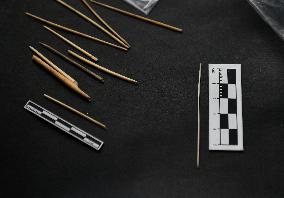
(220806) -- SHENMU, Aug. 6, 2022 (Xinhua) -- An archeologist shows a needle made of bone excavated from the Shimao ruins, an important prehistoric site in Shenmu City, northwest China's Shaanxi Province, Aug. 6, 2022. Shimao ruins, located in Shenmu of northwest China's Shaanxi Province, were a neolithic city built about 4,300 years ago and abandoned roughly 300 years later during the Xia Dynasty (2070-1600 B.C.), the first dynasty in China described in historical chronicles. Over the past 10 years, excavators have uncovered a stone city with immense fortifications and sophisticated infrastructure, thousands of luxurious artifacts and a 230-foot-high stepped pyramid. "The site's early date and peripheral location were surprising since Chinese civilization was thought to have first developed in the Central Plains around 500 years after Shimao's founding," read an article in the Archaeology journal. (Xinhua/Zhang Bowen)

  •  
CHINA-SHAANXI-SHIMAO RUINS (CN)

CHINA-SHAANXI-SHIMAO RUINS (CN)

(220806) -- SHENMU, Aug. 6, 2022 (Xinhua) -- An archeologist works at the Shimao ruins, an important prehistoric site in Shenmu City, northwest China's Shaanxi Province, Aug. 6, 2022. Shimao ruins, located in Shenmu of northwest China's Shaanxi Province, were a neolithic city built about 4,300 years ago and abandoned roughly 300 years later during the Xia Dynasty (2070-1600 B.C.), the first dynasty in China described in historical chronicles. Over the past 10 years, excavators have uncovered a stone city with immense fortifications and sophisticated infrastructure, thousands of luxurious artifacts and a 230-foot-high stepped pyramid. "The site's early date and peripheral location were surprising since Chinese civilization was thought to have first developed in the Central Plains around 500 years after Shimao's founding," read an article in the Archaeology journal. (Xinhua/Zhang Bowen)

  •  
CHINA-SHAANXI-SHIMAO RUINS (CN)

CHINA-SHAANXI-SHIMAO RUINS (CN)

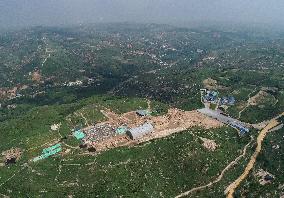
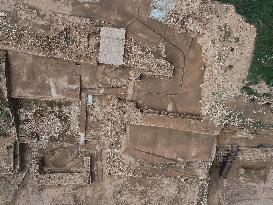
(220806) -- SHENMU, Aug. 6, 2022 (Xinhua) -- Aerial photo taken on Aug. 6, 2022 shows a view of the Shimao ruins, an important prehistoric site in Shenmu City, northwest China's Shaanxi Province. Shimao ruins, located in Shenmu of northwest China's Shaanxi Province, were a neolithic city built about 4,300 years ago and abandoned roughly 300 years later during the Xia Dynasty (2070-1600 B.C.), the first dynasty in China described in historical chronicles. Over the past 10 years, excavators have uncovered a stone city with immense fortifications and sophisticated infrastructure, thousands of luxurious artifacts and a 230-foot-high stepped pyramid. "The site's early date and peripheral location were surprising since Chinese civilization was thought to have first developed in the Central Plains around 500 years after Shimao's founding," read an article in the Archaeology journal. (Xinhua/Zhang Bowen)

  •  
CHINA-SHAANXI-SHIMAO RUINS (CN)

CHINA-SHAANXI-SHIMAO RUINS (CN)

(220806) -- SHENMU, Aug. 6, 2022 (Xinhua) -- Photo taken on Aug. 6, 2022 shows needles made of bone excavated from the Shimao ruins, an important prehistoric site in Shenmu City, northwest China's Shaanxi Province. Shimao ruins, located in Shenmu of northwest China's Shaanxi Province, were a neolithic city built about 4,300 years ago and abandoned roughly 300 years later during the Xia Dynasty (2070-1600 B.C.), the first dynasty in China described in historical chronicles. Over the past 10 years, excavators have uncovered a stone city with immense fortifications and sophisticated infrastructure, thousands of luxurious artifacts and a 230-foot-high stepped pyramid. "The site's early date and peripheral location were surprising since Chinese civilization was thought to have first developed in the Central Plains around 500 years after Shimao's founding," read an article in the Archaeology journal. (Xinhua/Zhang Bowen)

  •  
CHINA-SHAANXI-SHIMAO RUINS (CN)

CHINA-SHAANXI-SHIMAO RUINS (CN)

(220806) -- SHENMU, Aug. 6, 2022 (Xinhua) -- Photo taken on Aug. 6, 2022 shows a view of the Shimao ruins, an important prehistoric site in Shenmu City, northwest China's Shaanxi Province. Shimao ruins, located in Shenmu of northwest China's Shaanxi Province, were a neolithic city built about 4,300 years ago and abandoned roughly 300 years later during the Xia Dynasty (2070-1600 B.C.), the first dynasty in China described in historical chronicles. Over the past 10 years, excavators have uncovered a stone city with immense fortifications and sophisticated infrastructure, thousands of luxurious artifacts and a 230-foot-high stepped pyramid. "The site's early date and peripheral location were surprising since Chinese civilization was thought to have first developed in the Central Plains around 500 years after Shimao's founding," read an article in the Archaeology journal. (Xinhua/Yang Yimiao)

  •  
CHINA-SHAANXI-SHIMAO RUINS (CN)

CHINA-SHAANXI-SHIMAO RUINS (CN)

(220806) -- SHENMU, Aug. 6, 2022 (Xinhua) -- Aerial photo taken on Aug. 6, 2022 shows a view of the Shimao ruins, an important prehistoric site in Shenmu City, northwest China's Shaanxi Province. Shimao ruins, located in Shenmu of northwest China's Shaanxi Province, were a neolithic city built about 4,300 years ago and abandoned roughly 300 years later during the Xia Dynasty (2070-1600 B.C.), the first dynasty in China described in historical chronicles. Over the past 10 years, excavators have uncovered a stone city with immense fortifications and sophisticated infrastructure, thousands of luxurious artifacts and a 230-foot-high stepped pyramid. "The site's early date and peripheral location were surprising since Chinese civilization was thought to have first developed in the Central Plains around 500 years after Shimao's founding," read an article in the Archaeology journal. (Xinhua/Zhang Bowen)

  •  
CHINA-SHAANXI-SHIMAO RUINS (CN)

CHINA-SHAANXI-SHIMAO RUINS (CN)

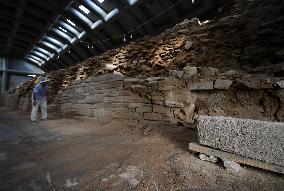
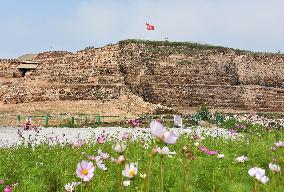
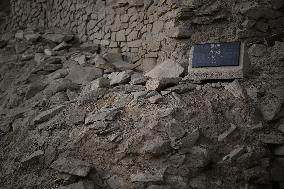
(220806) -- SHENMU, Aug. 6, 2022 (Xinhua) -- Photo taken on Aug. 6, 2022 shows the reinforcing wall at the Shimao ruins, an important prehistoric site in Shenmu City, northwest China's Shaanxi Province. Shimao ruins, located in Shenmu of northwest China's Shaanxi Province, were a neolithic city built about 4,300 years ago and abandoned roughly 300 years later during the Xia Dynasty (2070-1600 B.C.), the first dynasty in China described in historical chronicles. Over the past 10 years, excavators have uncovered a stone city with immense fortifications and sophisticated infrastructure, thousands of luxurious artifacts and a 230-foot-high stepped pyramid. "The site's early date and peripheral location were surprising since Chinese civilization was thought to have first developed in the Central Plains around 500 years after Shimao's founding," read an article in the Archaeology journal. (Xinhua/Zhang Bowen)

  •  
CHINA-SHAANXI-SHIMAO RUINS (CN)

CHINA-SHAANXI-SHIMAO RUINS (CN)

(220806) -- SHENMU, Aug. 6, 2022 (Xinhua) -- Aerial photo taken on Aug. 6, 2022 shows a view of the Shimao ruins, an important prehistoric site in Shenmu City, northwest China's Shaanxi Province. Shimao ruins, located in Shenmu of northwest China's Shaanxi Province, were a neolithic city built about 4,300 years ago and abandoned roughly 300 years later during the Xia Dynasty (2070-1600 B.C.), the first dynasty in China described in historical chronicles. Over the past 10 years, excavators have uncovered a stone city with immense fortifications and sophisticated infrastructure, thousands of luxurious artifacts and a 230-foot-high stepped pyramid. "The site's early date and peripheral location were surprising since Chinese civilization was thought to have first developed in the Central Plains around 500 years after Shimao's founding," read an article in the Archaeology journal. (Xinhua/Zhang Bowen)

  •  
CHINA-SHAANXI-SHIMAO RUINS (CN)

CHINA-SHAANXI-SHIMAO RUINS (CN)

(220806) -- SHENMU, Aug. 6, 2022 (Xinhua) -- Archeologists measure a recently-excavated stone carvings at the Shimao ruins, an important prehistoric site in Shenmu City, northwest China's Shaanxi Province, Aug. 6, 2022. Shimao ruins, located in Shenmu of northwest China's Shaanxi Province, were a neolithic city built about 4,300 years ago and abandoned roughly 300 years later during the Xia Dynasty (2070-1600 B.C.), the first dynasty in China described in historical chronicles. Over the past 10 years, excavators have uncovered a stone city with immense fortifications and sophisticated infrastructure, thousands of luxurious artifacts and a 230-foot-high stepped pyramid. "The site's early date and peripheral location were surprising since Chinese civilization was thought to have first developed in the Central Plains around 500 years after Shimao's founding," read an article in the Archaeology journal. (Xinhua/Zhang Bowen)

  •  
CHINA-SHAANXI-SHIMAO RUINS (CN)

CHINA-SHAANXI-SHIMAO RUINS (CN)

(220806) -- SHENMU, Aug. 6, 2022 (Xinhua) -- Photo taken on Aug. 6, 2022 shows stone carvings excavated from the Shimao ruins, an important prehistoric site in Shenmu City, northwest China's Shaanxi Province. Shimao ruins, located in Shenmu of northwest China's Shaanxi Province, were a neolithic city built about 4,300 years ago and abandoned roughly 300 years later during the Xia Dynasty (2070-1600 B.C.), the first dynasty in China described in historical chronicles. Over the past 10 years, excavators have uncovered a stone city with immense fortifications and sophisticated infrastructure, thousands of luxurious artifacts and a 230-foot-high stepped pyramid. "The site's early date and peripheral location were surprising since Chinese civilization was thought to have first developed in the Central Plains around 500 years after Shimao's founding," read an article in the Archaeology journal. (Xinhua/Yang Yimiao)

  •  
CHINA-SHAANXI-SHIMAO RUINS (CN)

CHINA-SHAANXI-SHIMAO RUINS (CN)

(220806) -- SHENMU, Aug. 6, 2022 (Xinhua) -- An archeologist cleans recently-excavated stone carvings at the Shimao ruins, an important prehistoric site in Shenmu City, northwest China's Shaanxi Province, Aug. 6, 2022. Shimao ruins, located in Shenmu of northwest China's Shaanxi Province, were a neolithic city built about 4,300 years ago and abandoned roughly 300 years later during the Xia Dynasty (2070-1600 B.C.), the first dynasty in China described in historical chronicles. Over the past 10 years, excavators have uncovered a stone city with immense fortifications and sophisticated infrastructure, thousands of luxurious artifacts and a 230-foot-high stepped pyramid. "The site's early date and peripheral location were surprising since Chinese civilization was thought to have first developed in the Central Plains around 500 years after Shimao's founding," read an article in the Archaeology journal. (Xinhua/Zhang Bowen)

  •  
CHINA-SHAANXI-SHIMAO RUINS (CN)

CHINA-SHAANXI-SHIMAO RUINS (CN)

(220806) -- SHENMU, Aug. 6, 2022 (Xinhua) -- Photo taken on Aug. 6, 2022 shows part of the Shimao ruins, an important prehistoric site in Shenmu City, northwest China's Shaanxi Province. Shimao ruins, located in Shenmu of northwest China's Shaanxi Province, were a neolithic city built about 4,300 years ago and abandoned roughly 300 years later during the Xia Dynasty (2070-1600 B.C.), the first dynasty in China described in historical chronicles. Over the past 10 years, excavators have uncovered a stone city with immense fortifications and sophisticated infrastructure, thousands of luxurious artifacts and a 230-foot-high stepped pyramid. "The site's early date and peripheral location were surprising since Chinese civilization was thought to have first developed in the Central Plains around 500 years after Shimao's founding," read an article in the Archaeology journal. (Xinhua/Zhang Bowen)

  •  

Iraqi displays heritage artifacts in private museum

STORY: Iraqi displays heritage artifacts in private museum DATELINE: June 29, 2022 LENGTH: 00:03:02 LOCATION: Baghdad CATEGORY: SOCIETY SHOTLIST: 1. various of the private al-Salam (Peace) Museum in Baghdad 2. SOUNDBITE (Arabic): MOHAMMED SAYED NOOR, Owner of the al-Salam Museum 3. SOUNDBITE (Arabic): AMAL IBRAHIM, Head of the Young Mutanabi Center STORYLINE: At a hall in the historical building of the al-Baghdadi Cultural Center, Mohammed Sayed Noor, researcher in the Baghdadi folklore, proudly displays his heritage collections that tell the stories of the people of Baghdad. Noor receives visitors at his private al-Salam (Peace) Museum, which exhibits his antiques of stamps, coins, carpets, utensils made of copper and wood, ancient weapons, and other things that Noor has been lovingly collecting since he was a child in early 1970s. Noor told Xinhua that he was greatly influenced by his childhood, as he lived in his father's house, which was built in the old Baghdadi style. The place had a clear influenc

  •  
King Tut's golden mask at museum in Cairo

King Tut's golden mask at museum in Cairo

CAIRO, Egypt - Soldiers guard the golden mask of King Tutankhamun at the Museum of Egyptian Antiquities in Cairo on Feb. 16, 2011. A number of historical artifacts are believed to have been stolen during the uprising to overthrow Egyptian President Hosni Mubarak. (Kyodo)

  •  
Historical artifacts loaned from Taiwan on display as planned

Historical artifacts loaned from Taiwan on display as planned

TOKYO, Japan - Japanese and Taiwanese media members wait for the start of a private viewing for an exhibition at the Tokyo National Museum in Tokyo of historical Chinese artifacts on loan from Taiwan's National Palace Museum on June 23, 2014, following the Japanese side's apology for having omitted the word "National" on posters and other materials and the reinstatement of the official name. (Kyodo)

  • Main
  • Top
  • Editorial
  • Creative
  • About Us
  • About ILG
  • Terms of use
  • Company
  • BEHIND
  • Price List
  • Single Plan
  • Monthly Plan
  • Services
  • Shooting
  • Rights Clearance
  • Support
  • FAQ
  • How To Buy
  • Contact Us
  • Become a Partner

© KYODO NEWS IMAGES INC

All Rights Reserved.

  • Editorial
  • Olympics
  • News
  • Sports
  • Japan
  • Tech
  • Royal
  • Disaster
  • NorthKorea
  • Old Japan
  • SNS
  • Creative
  • Food
  • Japan
  • Landscape
  • Animal
  • Popular
  • #Ukraine
  • #Thailand
  • #coronavirus
  • #N. Korea
  • #China
  • #Russia
  • #Ukraine
  • #Thailand
  • #coronavirus
  • #N. Korea
  • #China
  • #Russia
  • Food
  • Japan
  • Landscape
  • Animal
  • Olympics
  • News
  • Sports
  • Japan
  • Tech
  • Royal
  • Disaster
  • NorthKorea
  • Old Japan
  • SNS